
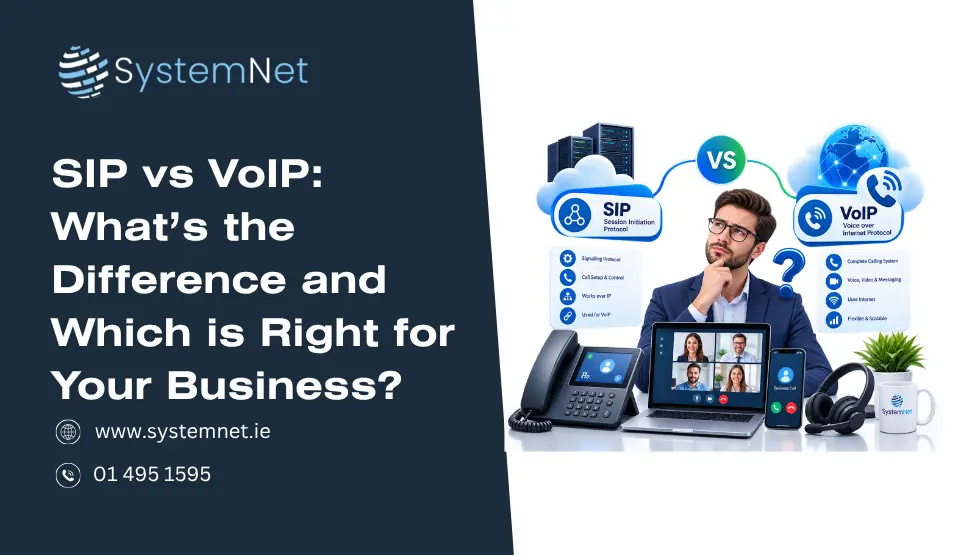
Are your planning a business phone upgrade or replacing an ageing business telephone system. The confusion of SIP vs VoIP is understandable because these technologies work together but serve different purposes. By understanding Voice over Internet Protocol, Session Initiation Protocol, SIP trunking, and hosted VoIP, you can avoid unnecessary costs, keep your existing equipment where appropriate, protect business continuity, and choose a scalable business communication platform that supports your organisation for years.
What is VoIP?
Voice over Internet Protocol (VoIP) is a technology that converts your voice into digital data and carries it across an internet connection rather than traditional telephone lines. Think of it as the foundation of modern IP telephony. A hosted PBX, cloud PBX, or virtual phone system uses VoIP to provide HD voice, VoIP calling, call routing, call forwarding, conference calling, voicemail to email, auto attendant, and flexible phone extensions across an IP phone system or compatible devices.
What Is SIP Trunking?
SIP trunking uses the Session Initiation Protocol (SIP) to establish, manage, and end voice sessions between your existing business telephone system or hosted PBX and the public telephone network through a SIP server. Instead of replacing your office phone system, SIP simply replaces physical phone lines with digital channels. If your business already operates an IP-enabled PBX, a SIP trunk provider allows you to keep your existing infrastructure while modernising connectivity.
SIP vs VoIP: Key Differences Before You Choose
Many businesses compare SIP and VoIP as if they are competing products. They are not. Imagine a motorway and the vehicles travelling on it. VoIP is the technology that carries your conversations, while SIP is one of the signalling protocols that directs where those conversations begin and end.
1. Technology vs Protocol
VoIP is the complete internet phone service that transports voice. SIP is the signalling protocol responsible for establishing, modifying, and terminating communication sessions between devices.
2. Complete Phone System vs Connectivity
A hosted VoIP solution delivers an entire digital phone system. SIP trunking simply connects your existing PBX to external telephone networks without replacing your communication platform.
3. Hardware Requirements
Hosted cloud phone systems often require only compatible IP phones, mobile apps, or softphones. SIP usually works with an existing SIP-compatible PBX already installed within your business.
4. Best Fit for Existing Systems
If you already own a capable office communication solution, SIP allows you to retain your investment. VoIP is often the better option when replacing outdated infrastructure completely.
5. Scalability
Hosted VoIP allows you to add new users, phone extensions, and locations quickly. SIP trunking generally expands by adding additional voice channels while keeping the same PBX platform.
6. Management
A hosted VoIP environment is normally managed through an online portal where you control users and features. SIP management focuses mainly on channels, routing, interoperability, and network integration.
7. Cost Structure
VoIP may reduce maintenance by eliminating ageing PBX hardware. SIP often lowers monthly line rental costs while extending the useful life of your existing business communication technology.
If You Already Have a Business Phone System, Do You Really Need VoIP?
Before replacing your existing business telephony platform, evaluate whether it already supports IP communications.
Existing IP PBX
If your PBX already supports SIP, replacing the whole system may not provide significant operational advantages.
Equipment Condition
Modern equipment with recent firmware often continues performing reliably after migrating to SIP connectivity.
Feature Availability
Review whether your current system already includes call forwarding, auto attendant, conferencing, and voicemail features before investing in a replacement.
Business Growth
If your current platform cannot support future expansion or hybrid working, a hosted VoIP migration becomes more attractive.
Maintenance Costs
Frequent repairs, unsupported hardware, or unavailable replacement parts often indicate that investing in hosted VoIP is the smarter long-term decision.
When SIP Trunking Makes More Sense Than a Hosted VoIP Phone System
SIP trunking is often the better investment when your existing communications infrastructure already meets your operational requirements.
Existing Compatible PBX
Your SIP-compatible PBX continues performing well and only requires modern external connectivity.
Reduce Telecom Costs
Replacing traditional ISDN or PSTN lines with SIP significantly reduces recurring communication expenses.
Keep Existing Equipment
You want maximum return from previously purchased communication hardware instead of replacing functioning equipment.
Multiple Voice Channels
Your organisation regularly handles simultaneous calls and needs additional channels without installing new physical telephone lines.
Minimal Business Disruption
Migrating only your telephone connectivity usually causes less operational interruption than replacing an entire business voice solution.
When a Hosted VoIP Phone System Is the Better Choice
A hosted VoIP solution is often the right choice when your existing telephone infrastructure no longer supports your business goals. Instead of maintaining ageing hardware, you move to cloud communications where the provider manages the platform while you access it through an IP phone, desktop application, or mobile device. This approach suits businesses seeking flexibility, simplified management, and a future-ready business communication platform.
Starting from Scratch
If your business has no existing office phone system, a hosted VoIP platform provides a complete digital business phone solution without investing in an on-premises PBX.
Outdated Telephone Equipment
Ageing analogue systems with limited features often cost more to maintain than replacing them with modern cloud phone systems supporting business call management.
Hybrid and Remote Working
When employees work from multiple locations, hosted VoIP keeps everyone connected through laptops, smartphones, and IP phones using a secure internet connection.
Rapid Business Growth
Hosted platforms let you add users, departments, and phone extensions within minutes without installing extra telephone lines or expensive communication hardware.
Advanced Communication Features
If your business needs auto attendant, conference calling, voicemail to email, advanced call routing, and call forwarding, hosted VoIP delivers these features through one integrated platform.
Can SIP and VoIP Work Together?
One of the biggest misconceptions is that you must choose either SIP or VoIP. In reality, Session Initiation Protocol is commonly used within a Voice over Internet Protocol environment. They often complement each other to create a complete business telephony solution.
SIP Enables VoIP
SIP establishes and manages communication sessions while VoIP carries your voice data across IP networks.
Hosted PBX Uses SIP
Most modern hosted PBX and cloud PBX platforms use SIP signalling to connect users, extensions, and external telephone networks.
Better Enterprise Communication
Combining SIP with VoIP creates a scalable enterprise communication environment supporting voice, video meetings, messaging, and collaboration.
Easy Expansion
As your organisation grows, SIP channels and VoIP users can expand independently without redesigning your complete communication infrastructure.
Improved Flexibility
Together they support business VoIP solutions, unified communications, mobile working, and centralised management across multiple office locations.
How Much Could Your Business Save by Switching?
The biggest savings rarely come from call charges alone. Businesses often reduce ongoing expenses by removing ISDN line rentals, lowering maintenance costs, and simplifying business communication technology. Hosted VoIP can eliminate expensive PBX upgrades, while SIP trunking helps retain existing equipment and reduce connectivity costs. Your actual savings depend on user numbers, call volumes, infrastructure, licensing, support requirements, and future business growth rather than a single monthly price.
What Happens to Your Existing Phone Numbers?
In most business migrations, you can retain your existing telephone numbers through a number porting process. This allows customers to continue reaching your business without changing contact details or marketing materials. During migration, your VoIP provider or SIP provider coordinates the transfer to minimise disruption. Careful planning helps maintain business continuity, protects customer relationships, and ensures incoming and outgoing calls continue operating during the transition.
Will You Need to Replace Your Phones or PBX?
Not necessarily. If your organisation already has SIP-compatible IP phones, a supported SIP phone system, or an IP phone system, these devices may continue working after migration. Older analogue phones generally require analogue telephone adapters or replacement hardware. If your on-premises PBX cannot support Session Initiation Protocol, replacing it with a hosted PBX or cloud PBX may provide greater long-term value, easier scalability, improved reliability, and access to modern communication features.
How Call Quality Depends on More Than Internet Speed
Many businesses assume that a faster broadband connection automatically guarantees better VoIP calling quality. In reality, professional IP telephony depends on several network factors working together. Your internet connection, network bandwidth, router configuration, and QoS (Quality of Service) policies all influence how consistently your business communication performs. A properly designed network delivers stable HD voice, reduces latency, and supports reliable business call management.
Sufficient Network Bandwidth
Every simultaneous VoIP call consumes bandwidth. Plan capacity for peak usage to prevent congestion affecting voice quality and other business applications.
Quality of Service (QoS)
QoS prioritises Voice over Internet Protocol traffic above less time-sensitive data, reducing latency, jitter, and packet loss during busy network periods.
Business-Grade Network Equipment
Enterprise routers, managed switches, and correctly configured firewalls provide more reliable performance than basic consumer networking equipment for business telephony.
Stable Internet Connection
Low latency, consistent upload speeds, and minimal packet loss matter more than headline download speeds for dependable internet calling and cloud communications.
Proper Network Design
Separate voice and data traffic using VLANs where appropriate. This improves reliability, simplifies troubleshooting, and maintains consistent performance for your office communication solution.
Security, Reliability, and Business Continuity
When selecting a VoIP service provider or SIP trunk provider, security and resilience should carry as much weight as pricing. Your business communication platform handles customer conversations, sensitive information, and daily operations. A well-designed solution combines encrypted signalling, resilient infrastructure, redundancy, and disaster recovery planning to support uninterrupted enterprise communication and long-term business continuity.
Encryption Protects Calls
Modern Session Initiation Protocol deployments support encrypted signalling and secure media streams to protect conversations against interception and unauthorised access.
Redundant Infrastructure
Multiple servers and network paths reduce single points of failure, helping your hosted VoIP environment remain available during equipment or connectivity issues.
High Availability
Reliable SIP servers continuously monitor services and automatically reroute traffic when failures occur, reducing communication interruptions for your organisation.
Disaster Recovery
Cloud-hosted business VoIP solutions allow calls to be redirected to alternative users or locations during office outages or unexpected emergencies.
Local Hosting Benefits
Choosing Irish-hosted cloud PBX infrastructure may improve latency, simplify regulatory compliance, and deliver faster support for businesses operating throughout Ireland.
The Mistakes Businesses Make When Choosing Between SIP and VoIP
Choosing the wrong communication solution often results from misunderstanding your existing infrastructure rather than selecting the wrong technology. Before investing in a business phone upgrade, assess your current business telephone system, future growth plans, and operational requirements instead of focusing only on upfront costs.
Choosing Only by Price
Selecting the cheapest option can increase long-term operating costs if the solution cannot support your communication requirements or future expansion.
Replacing a Working PBX
If your existing IP-enabled PBX performs well, SIP trunking may deliver better value than replacing your entire communication system.
Ignoring Future Growth
Choose a business voice solution that can accommodate additional users, offices, departments, and communication channels without major infrastructure changes.
Skipping Compatibility Checks
Always verify compatibility between your PBX, IP phones, SIP phone system, routers, and selected service before migration begins.
Assuming Every Provider Is Equal
Service quality varies significantly between providers in areas such as support, uptime, network design, redundancy, and platform reliability.
Analyse Your Requirements Before Choosing Any Business Phone Solution
Before deciding between hosted VoIP and SIP trunking, evaluate your business needs objectively. Understanding your infrastructure, communication goals, and future plans helps you choose the most appropriate modern phone system while avoiding unnecessary expenditure.
Review Existing Infrastructure
Identify whether your current office phone system already supports SIP and modern IP communication standards.
Understand Daily Call Volumes
Estimate concurrent calls, departments, and customer demand before selecting channel capacity or user licences.
Plan for Business Growth
Consider future staff expansion, new office locations, and increased communication requirements before making long-term technology decisions.
Assess Feature Requirements
List essential functions such as auto attendant, call forwarding, conference calling, voicemail to email, and reporting before comparing available solutions.
Evaluate Long-Term Costs
Compare hardware maintenance, licensing, support, connectivity, scalability, and future upgrades instead of focusing solely on the monthly subscription price.
Which Option Is Right for Your Business?
Choosing between hosted VoIP and SIP trunking should depend on your current communication infrastructure, future growth plans, and operational requirements rather than marketing claims. The table below provides practical recommendations based on common business situations.
| Business Situation | Recommended Solution | Why It Makes Sense |
|---|---|---|
| Starting a new business | Hosted VoIP | A complete cloud PBX and digital phone system without investing in on-premises PBX hardware. |
| Existing IP PBX | SIP Trunking | Keep your current IP phone system while replacing traditional phone lines with digital SIP connectivity. |
| Replacing ISDN | Depends on PBX compatibility | If your PBX supports Session Initiation Protocol, SIP may be enough. Otherwise, consider hosted VoIP. |
| Multi-site offices | Hosted VoIP or SIP | Hosted VoIP centralises management, while SIP suits organisations with existing multi-site PBX infrastructure. |
| Remote workforce | Hosted VoIP | Supports remote workforce, hybrid working, mobile applications, and cloud-based collaboration from any location. |
| Large enterprise with existing PBX | SIP Trunking | Protects previous infrastructure investment while increasing scalability through additional SIP voice channels. |
Get the Right Business Phone Solution in Ireland
Whether you need a complete hosted VoIP platform or cost-effective SIP trunking, choosing the right solution starts with understanding your existing infrastructure and future business goals. SystemNet delivers reliable business VoIP solutions, scalable cloud communications, and professional business communication technology for organisations across Ireland, helping you modernise your office phone system with confidence.
Conclusion
Understanding the difference between Voice over Internet Protocol and Session Initiation Protocol helps you avoid expensive mistakes and choose the right communication strategy. If you need a completely new business telephone system, hosted VoIP is often the better investment. If your existing IP telephony platform already performs well, SIP trunking may provide everything you need while reducing costs. The best long-term decision is based on your existing infrastructure, communication requirements, expected growth, and the level of flexibility your business requires.
Frequently Asked Questions
Can VoIP support video meetings as well as voice calls?
Yes, many hosted VoIP platforms support unified communications, including video conferencing, messaging, screen sharing, and voice communication from one platform.
How many SIP channels does my business need?
Generally, one SIP channel supports one simultaneous call. Required capacity depends on your peak concurrent call volume, not employee numbers.
Can I use softphones instead of desk phones?
Yes, most business VoIP solutions support desktop applications and mobile softphones alongside traditional IP phones for greater flexibility.
Does VoIP require fibre broadband?
No, fibre improves performance, but any reliable internet connection with adequate network bandwidth, low latency, and properly configured QoS can support business VoIP.
How long does a SIP or VoIP migration usually take?
Migration time varies depending on system complexity, number porting, PBX compatibility, user numbers, and testing requirements before full deployment.